






What to see and do in Merida, Yucatan
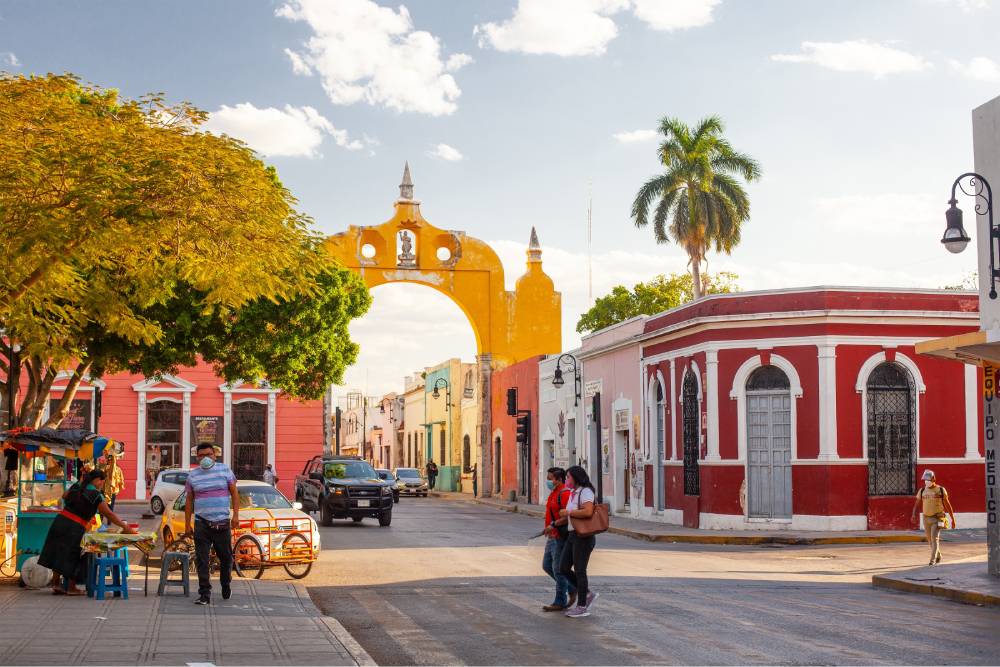
Visiting Yucatán is always a brilliant idea: Caribbean beaches, delicious cuisine and a cultural heritage of immeasurable value. Mérida, the state capital, is a must‑visit for its colonial legacy, artistic treasures, dreamlike natural settings, bold gastronomy and—above all—its warm, generous and welcoming people.
In this guide, we highlight the essential places to explore in Mérida, the most captivating city on the Yucatán Peninsula.
1. San Ildefonso Cathedral
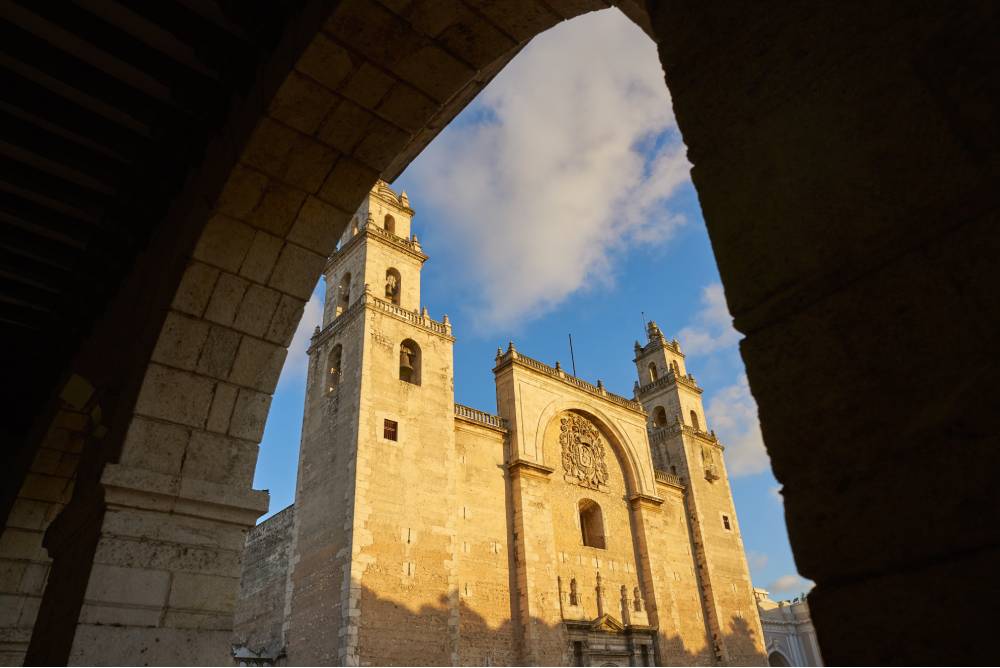
San Ildefonso Cathedral is a cultural and architectural icon you simply shouldn’t miss. Considered the oldest cathedral in the Americas, built in the latter half of the 16th century, it impresses with the monumentality of its austere design and the elegant symmetry of its twin towers. Inside, the highlight is the Christ of Unity, an imposing wooden sculpture regarded as the largest indoor sculpture in the world. A particularly captivating detail: many of the stones used in its construction were taken from ancient Mayan structures, adding yet another layer of history to this remarkable temple.
2. Casa de los Montejo (Montejo House)
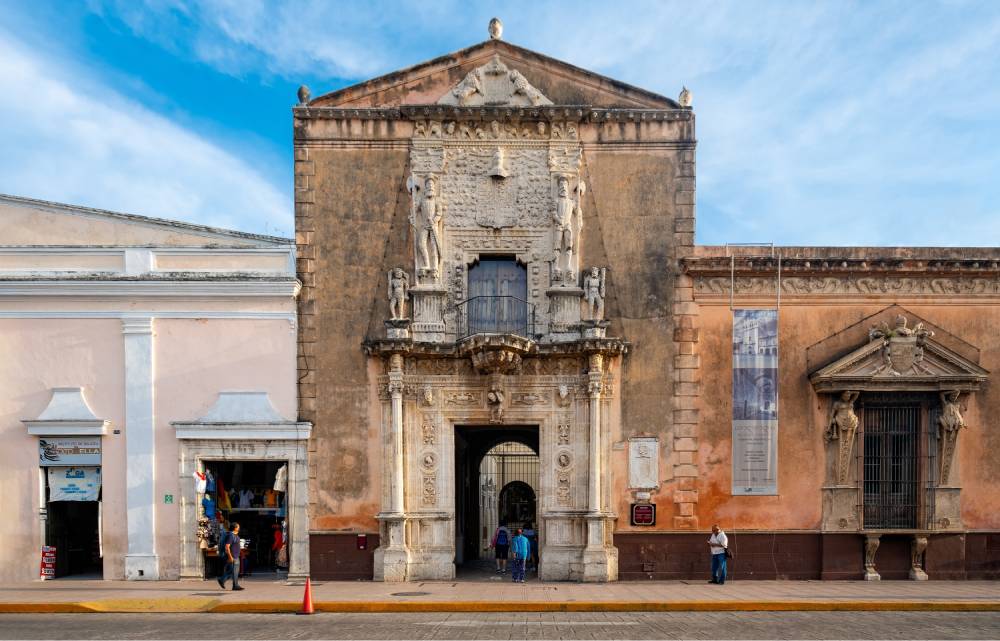
Built between 1543 and 1549 by Francisco de Montejo y León, “El Mozo,” the Casa de los Montejo (Montejo House) stands as one of the most significant civil monuments of Mexico’s colonial era. Its main façade—remarkably preserved—is considered the finest example of Plateresque art in Mexican civil architecture. Exquisitely carved in stone, it features human figures, soldiers, fantastical characters, and mythological beings, all rendered with extraordinary precision. The portico also hides a fascinating detail: while the lower section was crafted by European artisans, the upper, later addition reveals a distinctly indigenous hand, creating a striking blend of artistic traditions.
3. Government Palace
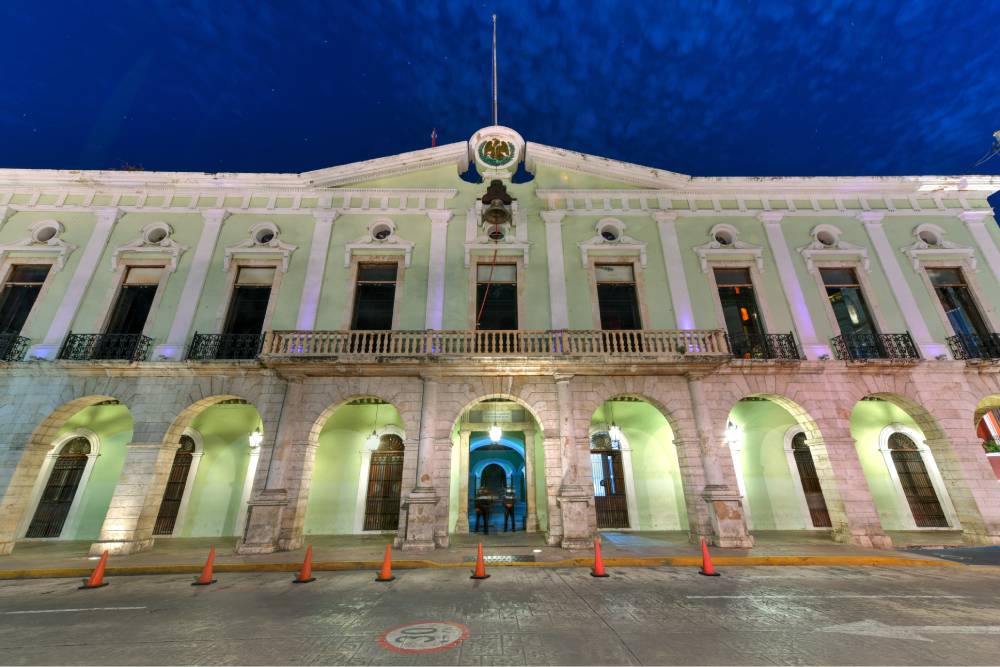
The Government Palace rises on the former site of the Royal Houses, the political heart of the region during the colonial era. That original building served both as the residence of the Crown’s representatives and as the administrative centre from which the province was governed. After Independence, it was officially renamed the Government Palace, and in the 19th century it was demolished to make way for the structure we see today. Inside, it safeguards one of Mérida’s greatest cultural treasures: the murals of Fernando Castro Pacheco, one of Yucatán’s most celebrated 20th‑century artists.
4. Paseo de Montejo
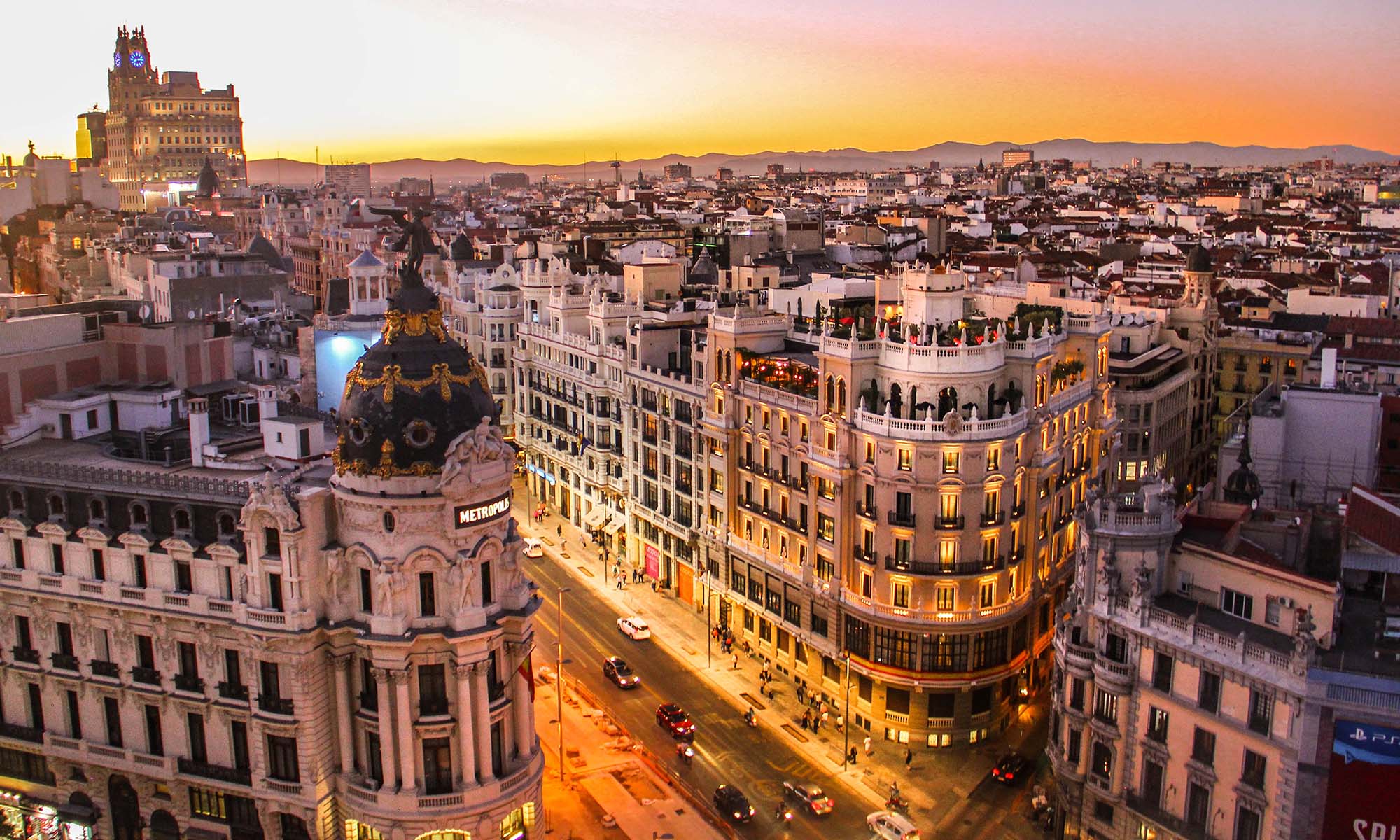
Paseo de Montejo, Mérida’s most iconic avenue, was born during the henequen boom, when the wealth generated by the famed “green gold” fuelled an ambitious urban project designed to give the city a grand promenade worthy of Europe’s finest boulevards. Strolling along it today feels like stepping back into that age of splendour: majestic mansions that now house museums, galleries, banks, and cultural centres line the avenue with timeless elegance. Among its essential stops are Quinta Montes Molina, the Monument to the Fatherland, and a collection of exquisite French‑style residences.
5. Monument to the Fatherland
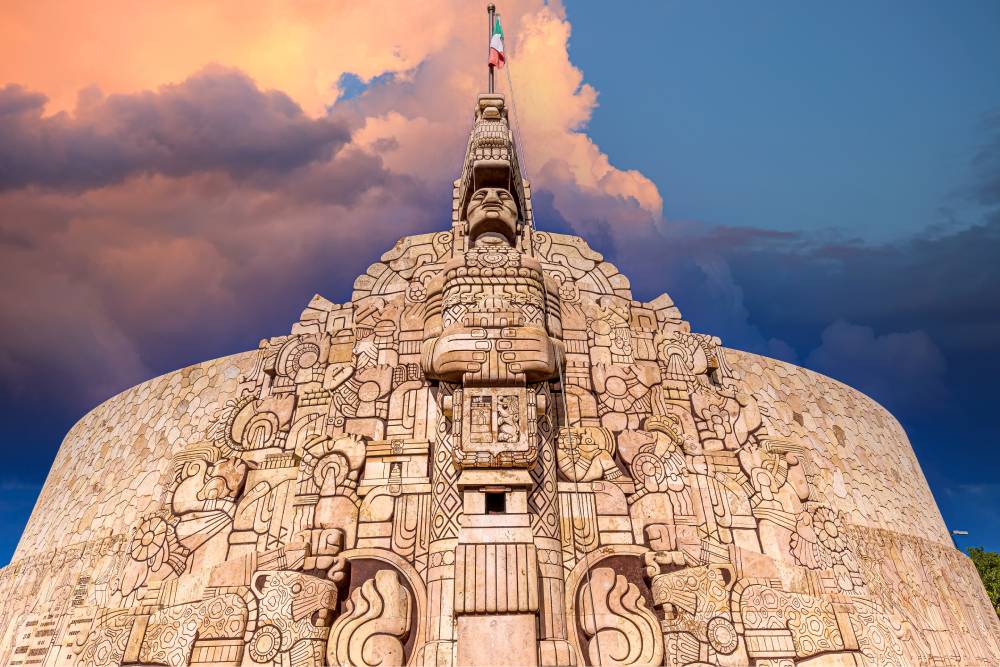
This 14‑metre‑high stone monument offers a sweeping visual journey through Mexico’s history, from the founding of Tenochtitlán to the mid‑20th century. Its northern section evokes Lake Texcoco, crowned by the iconic eagle perched on a nopal cactus, the enduring symbol of the nation. Surrounding it, 31 carved columns represent the Mexico of that era: 28 states, two territories, and the Federal District, all woven into a single monumental narrative.
6. Grand Mayan Museum
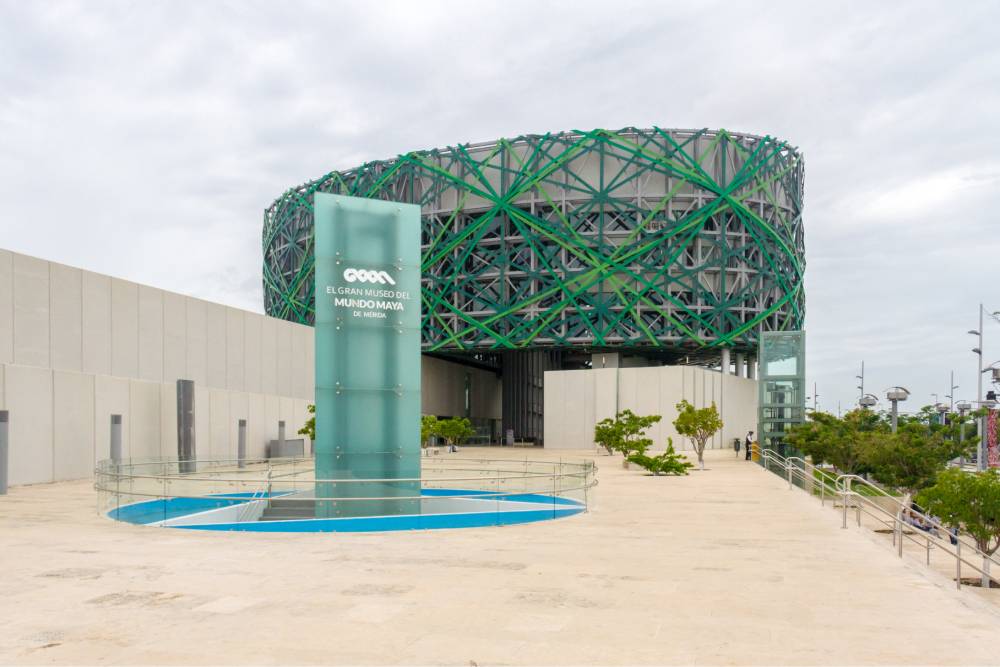
The Grand Mayan Museum of Mérida is one of Latin America’s most innovative cultural spaces and an essential stop for anyone wishing to understand the history and worldview of the Maya. Its four permanent galleries showcase more than 500 archaeological, ethnographic and historical pieces, offering a rich journey through time. The exhibition blends multimedia installations, immersive recreations and interactive elements, allowing visitors to grasp the evolution of this remarkable civilization from the pre‑classical era to the present day.
7. Américas Park
Américas Park, built between 1942 and 1945 during the administration of Ernesto Novelo, is a space where nature, history and art converge, creating a singular cultural experience in the heart of Mérida. More than a simple urban park, it is a monumental complex that pays tribute to Mayan heritage and the Pan‑American ideal. This verdant oasis spans four city blocks and is divided into three distinct sections, each with its own unique character.
8. What is there to visit in the area around Mérida?
If you have time, there are two amazing day trips you can do around Mérida: the fascinating archaeological wonders of Chichen Itza and the cenotes of the Mucuyche Hacienda.
Chichén Itzá
Chichén Itzá, the most renowned Mayan city in the world—named a UNESCO World Heritage Site in 1988 and a Wonder of the World in 2007—stands as one of the most extraordinary and best‑preserved legacies of Mayan civilization. This ancient metropolis reflects the fusion of Mayan and Toltec cultures, embodied in three monumental structures: the stepped pyramid known as El Castillo; El Caracol, the spiral observatory used for astronomical study; and the Temple of the Warriors, flanked by the evocative Forest of the Thousand Columns.
Cenotes Hacienda Mucucyché
The journey to Hacienda Mucucyché already hints at its magic: a narrow road framed by lush, enveloping vegetation. Your visit begins with a guided tour of the estate, preserved almost exactly as it was in its earliest days. Once you’ve absorbed its history, it’s time to cool off in its spectacular cenotes: Carlota, semi‑open and shimmering with crystal‑clear waters; and Azul Maya, an underground sanctuary of stalactites and stalagmites that leads to a stunning natural pool of deep turquoise.
-
When is the best time of year to visit Mérida, Yucatán?
The ideal time to visit Mérida is between November and March, when the weather is cooler and drier. The rainy season runs from June to October, bringing higher temperatures and humidity—though it’s a great moment to enjoy the city with fewer tourists.
-
Is there much to do with kids in Mérida?
Absolutely. Mérida is a fantastic destination for families. Little travellers can enjoy Américas Park, the Grand Mayan Museum, local zoos and excursions to nearby cenotes and natural adventure parks.
-
Is it safe to travel to Mérida, Yucatán?
Yes. Mérida is widely regarded as one of the safest cities in Mexico, and ranks 30th worldwide according to the specialist publication CEOWorld Magazine. However, we always recommended caution and using a specialist guide to visit natural areas.
- See more questions
More about Riviera Maya

The best hotels on Riviera Maya


4.0text.accommodation.listing.star.rating.stars
Riviera Maya, Mexico
4.0text.accommodation.listing.star.rating.stars
Riviera Maya, M
4.0text.accommodation.listing.star.rating.stars
Riviera Maya, Mexico
4.0text.accommodation.listing.star.rating.stars
Riviera Maya, Mexico
Load more hotels