








Excursion to Mount Etna, the active volcano and symbol of Sicily
The tallest active volcano on the Eurasian Plate, Mount Etna rises majestically on the eastern coast of Sicily, in the province of Catania. Known to locals as Mongibello or Muncibbeddu in Sicilian, this natural wonder is a UNESCO World Heritage Site that not only dominates the landscape but also shapes the identity of this part of the island.
Visiting Mount Etna means exploring an important cultural landscape and a strategic centre for international research with an extraordinary influence on volcanology, geology, and other Earth science disciplines.
1. History of Mount Etna
Mount Etna is a relatively young volcano in geological terms, but its origins date back to the Quaternary period, approximately 500,000 years ago, when this area of Sicily was largely submerged. The first volcanic activity consisted of submarine eruptions which, as they accumulated, shaped the original volcanic edifice and contributed to the formation of the present-day Plain of Catania.
Since then, its activity has been almost uninterrupted. Historical sources record over 135 eruptions in antiquity. At that time, Etna was not only a natural phenomenon but was also associated with mythology and the hidden forces of the earth. However, the most devastating event in the volcano's history occurred in 1669. A series of fissures on the southern flank gave rise to a massive lava flow that descended for weeks until it reached the Ionian Sea, wiping out entire villages in its path.
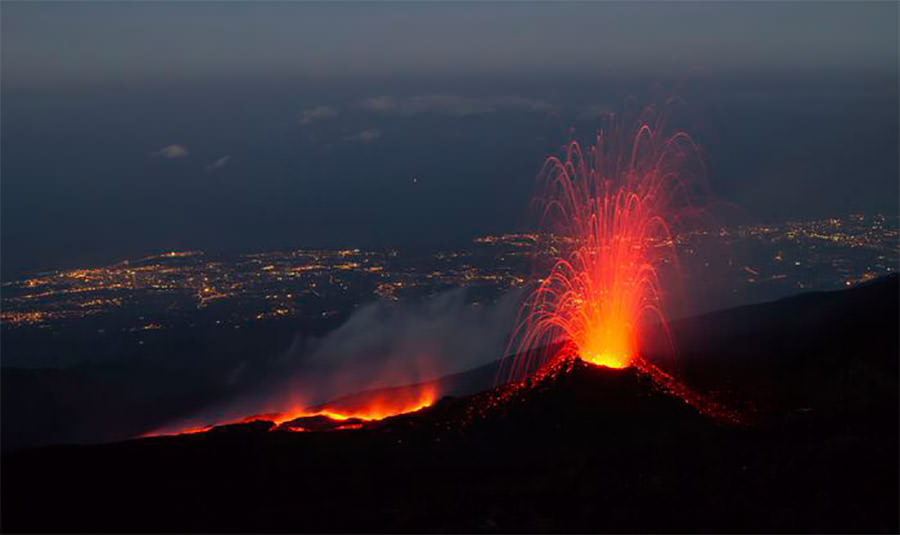
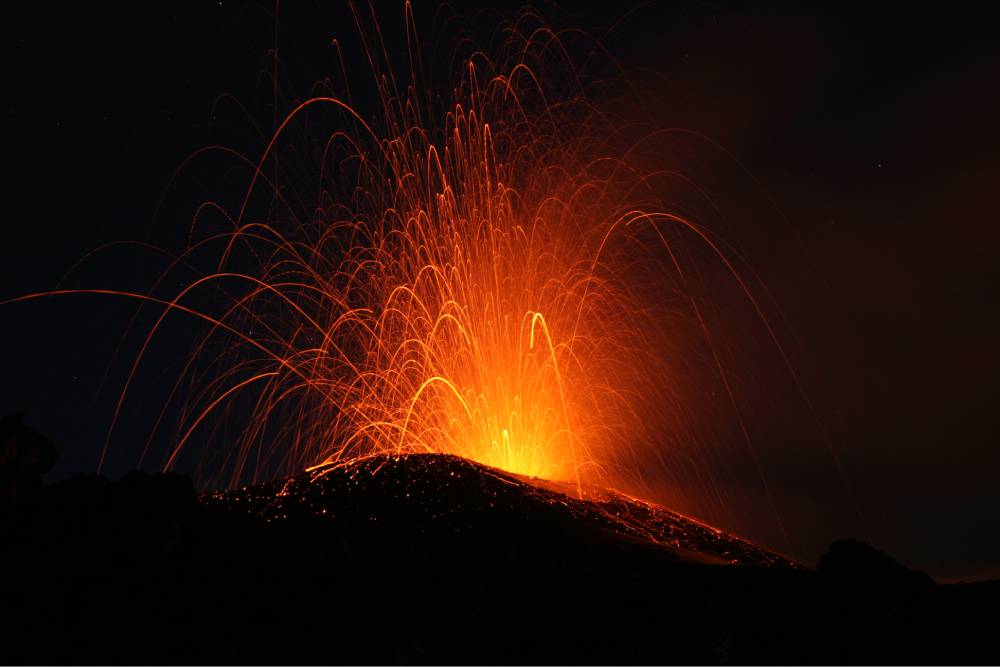
Over the past decade, activity has been constant, so it's common for several eruptions to occur in a year, or even in a month. Despite their frequency, the eruptions are relatively harmless and are classified as low-level volcanic activity.
2. The best routes for exploring Mount Etna
Below, we show you different options for exploring the extraordinary geological and biological diversity of Mount Etna National Park.
Mount Etna from the south: the gateway to Etna
The southern slope of Mount Etna is the most accessible from the city of Catania and, for that reason, is also the most frequented by tourists. The starting point is Nicolosi, popularly known as "the gateway to Etna”. From here, the usual route ascends by road to reach an altitude of 1,900 meters, where the Rifugio Sapienza is located. This refuge serves as a logistical base from which guided tours depart for the higher peaks and nearby secondary craters. If you prefer a less active experience, the Etna cable car departs from the refuge. This modern infrastructure allows you to overcome a significant elevation gain in just 15 minutes, reaching the area known as La Montagnola at 2,500 meters. During the ascent, you can take in how the landscape changes, from the green of the forests to the dark tones of the rock.
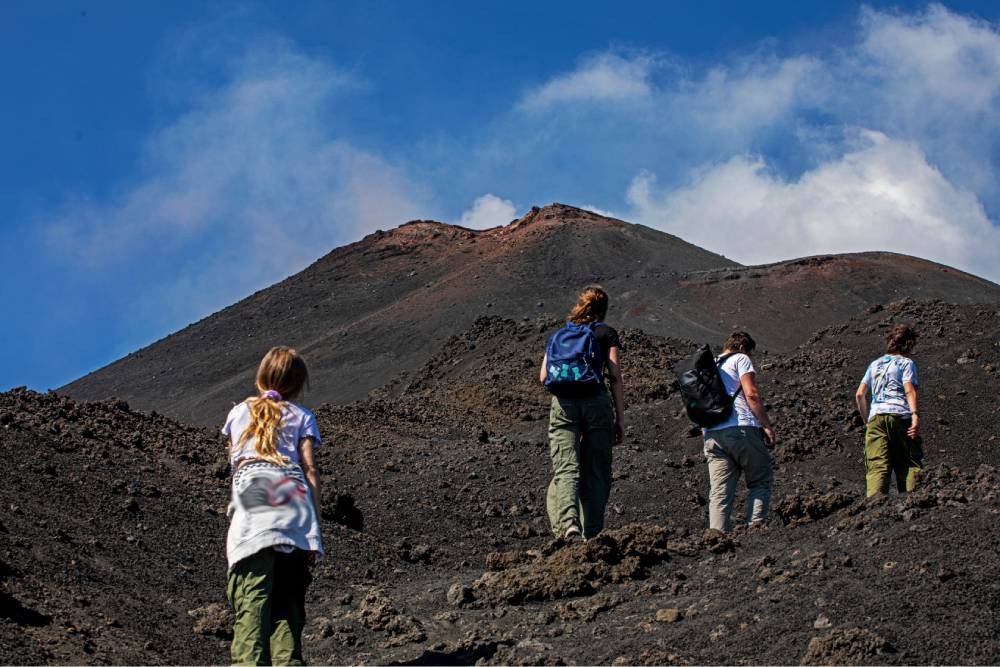
Mount Etna from the east: the great volcanic amphitheatre
The eastern slopes of Etna offer a more immersive experience, with hiking trails that help you appreciate the spectacular landscape. The ascent begins on the Mareneve road, winding through ancient lava flows and dense forests.
A must-see first stop are the Montes Sartorius: seven extinct craters formed during the 1865 eruption. This is an easy and educational route, providing a clear understanding of how eruptive fractures open and how secondary craters are organized.
The route continues by car to Rifugio Citelli, located at an altitude of 1,700 meters. From here, more immersive trails begin, such as the Serracozzo Trail, which leads to the higher reaches of the volcano. The route culminates at one of the volcano's most impressive points: the edge of Valle del Bove, a gigantic volcanic depression shaped like an amphitheatre: a witness to centuries of eruptive activity.
Mount Etna from the northern slope: extreme landscapes and active volcanism
The northern slope of Etna offers one of the most comprehensive and spectacular experiences of the volcano for those seeking a scientific and visual approach. Access is usually from the town of Linguaglossa, from where you move through forests and over ancient lava flows to reach Piano Provenzana, at an altitude of 1,800 meters. From here, excursions depart on foot and in off-road vehicles towards the most rugged and wildest areas.
From this point, you can also ascend to Pizzi Deneri Volcanological Observatory: at 2,900 metres, one of the most important monitoring centres for the volcano. Formed in the early 1970s and one of the most active since then, the southeast crater rises opposite the observatory. As night falls, the magma takes on a deep red hue, making this slope a truly privileged vantage point from which to observe this breathtaking natural spectacle.
-
When is the best time to visit Etna?
If there's a moment when Mount Etna reveals its full magnetism, it's at sunset. It's not just a matter of seeing this sight at its most majestic, with its reddish hues tinting the solidified lava flows, but also a practical one: at the end of the day, the volcano is less crowded and temperatures drop.
-
What activities can you do on Mount Etna?
Mount Etna is not just a volcano to admire; it's also a natural area that offers a wide variety of outdoor activities, suitable for different skill levels and all seasons, such as hiking, mountain biking, and skiing.
-
Is it safe to visit Mount Etna?
Yes, visiting Mount Etna is safe as long as you respect the rules of the National Park and the instructions of the authorities and specialized guides. The volcano is constantly monitored, which allows access to different areas to be regulated depending on eruptive activity.
- See more questions
More about Sicily


The best hotels in Sicily


4.0text.accommodation.listing.star.rating.stars
Sicily, Italy
Load more hotels